India vs Zimbabwe 3rd T20I pitch report: Harare conditions, averages and the toss call
The series is already sealed, but the third night in Harare still asks a clear tactical question. Here is what the venue, weather and last-five-match numbers say about how the 26 July game will play.
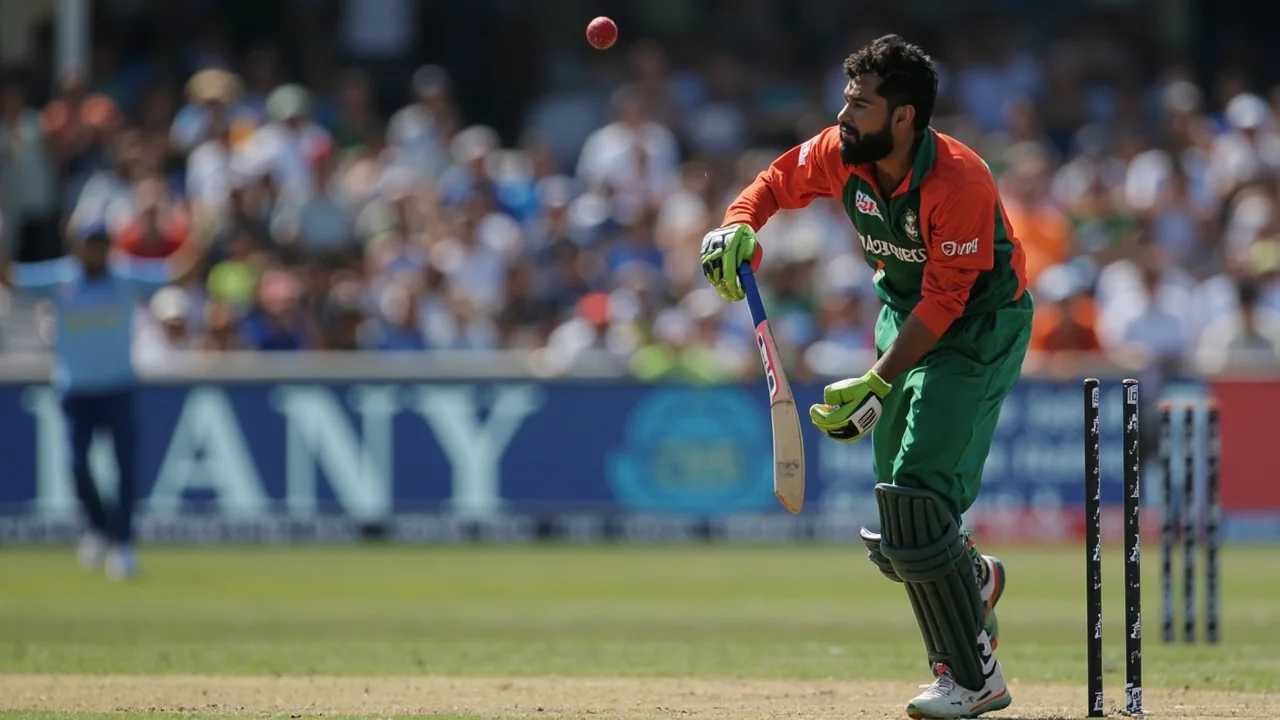
The third and final T20I between India and Zimbabwe was scheduled at Harare Sports Club on Sunday, 26 July 2026, with a 1:00 PM local start — 4:30 PM IST — after India had already taken the first two matches and the series. The series may be decided, but the conditions still shape the night. This match-eve note draws on what the venue has done across 77 men's T20Is and what the morning forecast allowed: early seam, settled stroke-play later, sunny skies and a toss call that has, historically, been close to a coin flip.
India arrive with the series pocketed. Zimbabwe arrive with a clear baseline for what their home deck does in July. Between those two facts sits the only question that matters for fantasy players, captaincy notes and captain-on-the-day alike: bowl first or bat first, and how long can a chase afford to take dew into account.
What Harare Sports Club has done across 77 men's T20Is
Harare Sports Club has hosted 77 men's T20 Internationals, with a listed seating capacity of around 10,000. Across that sample, teams batting first have won 40 matches, chasing teams have won 35, and two have ended without a result. That 40–35 split is close enough to neutral that recent form, not the venue pattern alone, usually decides the call. Captains who win the toss lean on dew, on the bowling depth they trust in the second innings, and on how fresh their batters are after a long travel block.
The overall average first-innings score at the venue sits at 158, with the last-five-match average climbing to 172. The average second-innings score is lower — 136 across the full sample, and 142 across the last five T20s. That gap is the one number that does push captains towards a chase. A second-innings chase has a working target rather than a fresh wicket, and the bowling side in the second innings often faces a surface that has lost a little early bite.
The pattern is consistent enough that fantasy players should treat 150 to 175 as a realistic first-innings band and 135 to 150 as the working chase zone. Anything above 180 from the first side, or below 130 while chasing, becomes a different tactical conversation.
Early seam, settled stroke-play — what the surface reads as
The pitch at Harare Sports Club in midwinter tends to offer something for the new ball in the first six to eight overs. The grass length sits on the shorter side at this time of year, the morning air is cool, and the square has a habit of giving the seamers a touch of lateral movement if they bowl a fuller length and hit the seam. After that opening window, the surface bakes under afternoon sun and starts to come onto the bat. By the time the second innings gets going, stroke-makers have the larger share.
That two-phase shape steers the powerplay brief on both sides. The side batting first generally wants to survive the first four to five overs without losing more than one wicket and reach a platform around 40 to 50. From there, the middle overs (six to fifteen) are where the innings is actually built: the surface settles, the field spreads, and run rates of seven to nine an over become realistic without huge risk. Death overs then become about clearing the inner ring and finding the shorter boundaries.
The chasing side gets the same window in a different order. Powerplay wickets are valuable on a pitch that is still doing a little. Middle overs are about consolidation with the chase rate kept inside seven. Death overs carry a bigger burden because the chase rate climbs and the ball is older. A 170-plus first-innings score therefore shifts the chase into a fifth-and-sixth-gear conversation; a 150 to 160 first-innings score leaves the chase in third and fourth gear, which is the comfortable lane.
Weather window: sunny, mild, no rain forecast
Match-eve conditions were reported as sunny and pleasant. Temperatures sat around 21°C in the afternoon window, with humidity near 47 percent, winds around 14 km/h, and no rain on the forecast. For a 1:00 PM local start in Harare in late July, that is close to a clean cricket afternoon. The sun is high enough to take any early grass moisture out of the pitch by the time the second innings begins. The wind is light enough not to bother swing bowlers much but strong enough to give boundary riders a small advantage on the longer sides.
Dew is the one variable the forecast cannot fully settle. Late July in Harare brings cool evenings, and a 1:00 PM start means the second innings is usually underway well before dew becomes a factor. By the time dew would normally settle, the chase is usually 12 to 14 overs old. That timing favours the batting side in the chase because the ball still grips the surface through the middle phase and only turns slippery once the game is already deep into the run chase.
What the forecast does not promise is a flat, dead track. The combination of cool morning air, a touch of grass and afternoon sun produces the two-phase pattern described above — early movement, then true bounce. That is not a doctored wicket and it is not a minefield. It is the kind of surface where captains who read the conditions accurately win more than captains who stick to a generic T20 template.
Venue records that frame the chase maths
The headline numbers from this venue, all from men's T20Is, frame how high and how low the day can stretch. Zimbabwe's 259/5 against Botswana on 28 September 2025 is the highest team total the ground has hosted. That score came in an innings where the top of the order cleared the inner ring repeatedly and the death overs produced four consecutive sixes. It is the ceiling a fantasy captain can imagine on a flat afternoon, not the average a real one should plan for.
At the other end, Malawi's 71 against Namibia on 30 September 2025 is the lowest completed T20I total here. That was a collapse rather than a typical chase — three early wickets, a middle-over slowdown against spin, and a finish that ran out of batting depth. It is the floor. Most innings at Harare land closer to 150 than to either extreme, which is why fantasy totals should be set conservatively and not chase the headlines.
The highest successful chase sits with Bangladesh, who knocked off 194/5 against Zimbabwe in July 2021. That chase required a stable top-of-the-order start, a finishing batter who cleared the long side, and a final over that was more about running hard than hitting big. It is the clearest demonstration that 190 is chaseable here, but only when the chase is paced rather than panicked. Anyone reading the average chase score of 136 should remember that the same surface has also hosted a 194 chase when the conditions dried out and the batters kept their shape.
The toss call, broken into a working decision tree
Three facts push the decision one way, and two push it the other. The chase has won 35 of 77. Average second-innings scores are lower than first-innings scores. Death overs in a chase are harder. Those three facts lean towards batting first.
Two facts push it the other way. Dew may settle later in the evening, and a 1:00 PM start gives the chasing side an innings before the heaviest dew window. The last-five-match average second-innings score has climbed to 142, which is closer to the first-innings average than the long-run sample suggests. Captains who trust their bowling depth in the second innings, particularly their slower bowlers and yorker specialists, often lean towards chasing on this surface.
The honest answer is that the toss call is a coin flip on the numbers alone. What decides it is the make-up of the XI. A side with three frontline pacers and a wrist-spin option that holds its line in the second innings usually chases. A side that is short on death bowling, or one that wants to set a target and apply scoreboard pressure in a dead rubber, usually bats. India, with the series already sealed, may rotate. Zimbabwe, with home pride to defend, may set the tone with the bat. The captain who wins the toss is unlikely to be wrong either way, but the brief they hand the XI will reveal how clearly they have read the conditions.
What the conditions mean for the XI and the captain's brief
For India, an XI built for this surface still needs three frontline seam options for the new ball and at least one bowler who can bowl into the wind at the death. A wrist-spin option helps against any left-handers in the Zimbabwe middle order; a finger-spin option helps with the hold-up phase in the middle overs. The chase will reward a deeper batting line-up because dew and a slowing outfield push the chase rate up in the final four overs.
For Zimbabwe, the same logic applies in reverse. They are likely to want their best powerplay batter to face the new ball, their most athletic fielders on the boundary for the death, and at least one spinner who can grip the surface even when the ball is older. A target of 170 or more will be hard to defend; a target of 150 to 160 will be defendable if the death overs hold.
For fantasy players, the numbers translate into a small set of calls. Top-order batters on both sides have the larger share of the innings at Harare in July. Bowlers who take the new ball have the larger share of the wickets. Spinners who bowl in the middle overs have the larger share of the hold-up overs and therefore the larger share of dot balls. Captaincy points are more likely to come from a 60 to 80 from a top-order batter or a three-wicket return from a new-ball bowler than from a late-innings cameo or a middle-over quiet over.
Fantasy cut: a brief reading of the conditions
Powerplay wickets are the premium stat on this surface in this window. The new ball moves, the field is up, and a batter who tries to hit through the line early is taking a real risk. New-ball bowlers who find the edge in the first three overs can build a spell worth chasing in fantasy totals.
Middle-overs scoring is the second premium stat. The surface settles, the field spreads, and a set batter can target one or two specific bowlers. Anchor batters who reach 30-plus by the tenth over have a higher chance of converting to 70-plus than at venues where the powerplay itself decides the innings.
Death-overs hitting is the third premium, but it is the most volatile. Boundaries are shorter on one side of Harare than the other, and the wind direction on the day decides which side counts. A 25-ball cameo at the death can outscore a 40-ball innings, and that volatility is exactly why captaincy calls in fantasy leagues should be conservative until the first innings shows the working score.
What this report does not claim
Toss, playing XIs, pitch maps from the morning inspection, dew timing and a final working score will not be known until the match starts. This match-eve note restricts itself to the verified venue record, the published forecast and the verified last-five-match averages. Anything that depends on a particular batter's match-up, a particular bowler's workload or a particular captain's tactical preference sits outside the verified record and is therefore left out of this preview.
Crowd numbers, ticket sales, social reaction and broadcast details are similarly out of scope. The verified record this article draws on covers the venue sample size, the named chase and team-total records, the pitch character, the weather window and the published averages. Those are the cells the desk is comfortable filling. The rest stays blank until the match supplies it.
The next marker
The next concrete event is the toss at 1:00 PM local time at Harare Sports Club on 26 July 2026. The conditions are clear enough that both captains will have a defensible call. The only thing the conditions do not yet tell us is which captain walks back from the middle holding the bat and which walks back holding the ball. For full live coverage of the third T20I and the rest of the international calendar, follow the cricket desk.