FPL Draft 101, explained: how the on-the-clock format actually works before your group chat picks
Premier League USA's FPL Draft 101 walk-through, posted to the @plinusa account on 4 August 2026, frames the format as the Fantasy Premier League product built for group chats. The fantasy desk breaks down what that means in practice: the no-budget snake draft, the on-the-clock timer, the squad shape, and the scoring differences that decide a Draft league from a Classic league.
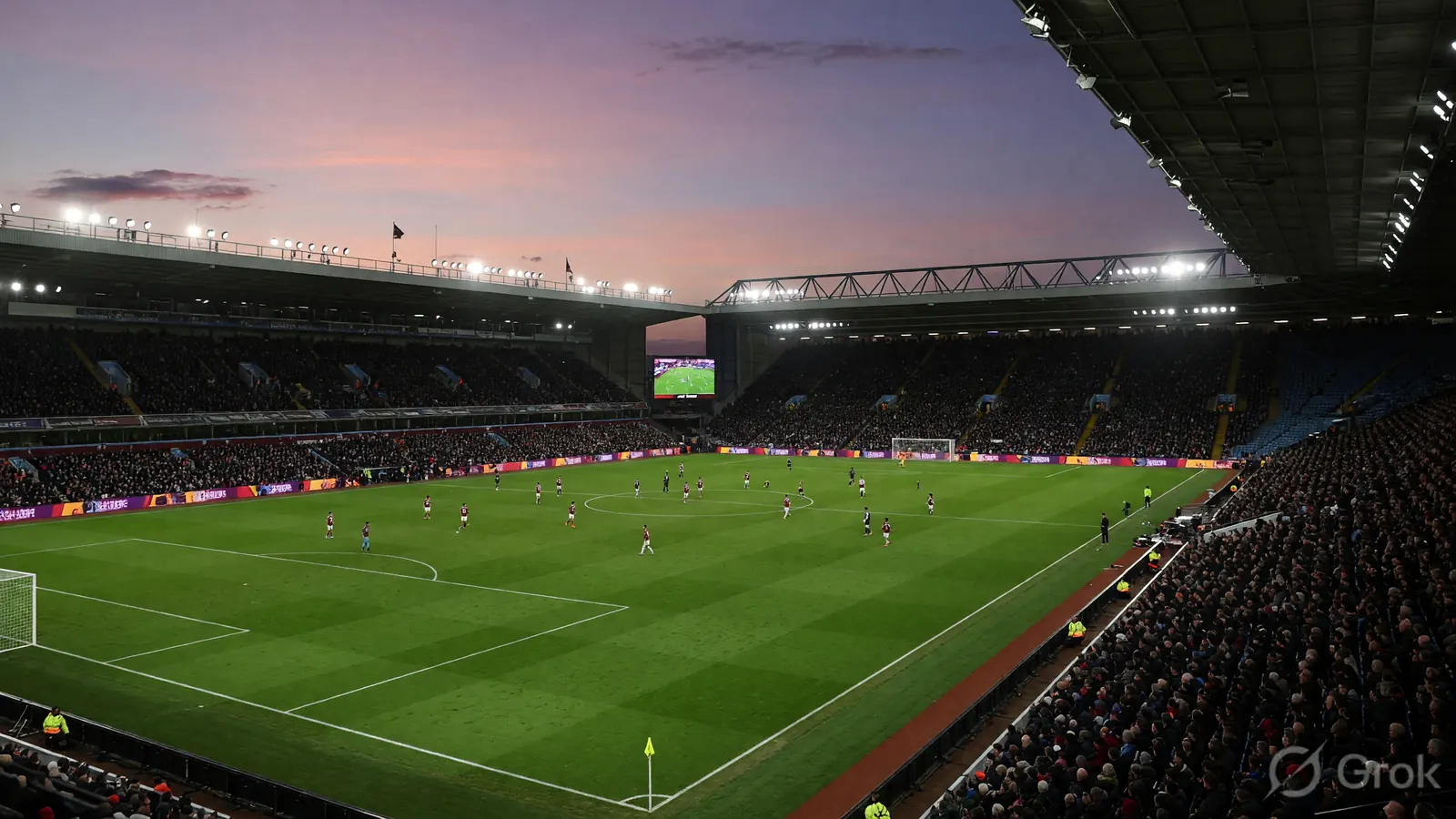
If you have ever spent a Premier League Saturday arguing about a wildcard chip in a private league chat, the format that Premier League USA has just refreshed on its @plinusa Instagram account was built for you. The carousel posted on 4 August 2026 calls itself "FPL Draft 101" and tells new players the one thing they need to know first: the Draft format replaces the salary-cap budget of Classic FPL with a no-budget snake draft, picks are made inside a group chat, and the round that decides the league is the one where the best player on the board drops far enough for the second team in the order to take him.
The full caption is short. "New to FPL Draft? We've got everything you need to know before you're on the clock. Use the link in bio to play." The intro slide inside the carousel sets the tone in two lines: "FPL DRAFT 101 — THE FANTASY PREMIER LEAGUE FORMAT BUILT FOR YOUR GROUP CHAT — NO BUDGET, JUST PICKS." The rest of the carousel is a swipe-through explainer. What the deck does not do, and what the @plinusa comments show new drafters still asking, is unpack the on-the-clock timer, the reverse-order snake structure, or the scoring table that turns a Draft league from a transfer market into a pre-season auction. This guide does.
Format at a glance
Two sentences that capture the difference between FPL Classic and FPL Draft before the longer reading starts. The rest of the explainer is built on top of these two facts.
There is no transfer budget, no wildcard chip, no free transfer allowance. The auction in August is the only place you ever spend anything, and the currency is draft-pick position, not virtual money.
Every manager in a Draft league takes fifteen players. There are no shared players, no team-level stacking rules and no price changes during the season, which is the part new drafters miss most often.
What the Premier League USA explainer actually changes
The reason the post matters for fantasy players who already use the Classic game is that FPL Draft has been around for several seasons but has not been a default part of the new-player onboarding flow. Premier League USA's "FPL DRAFT 101" carousel is the league's first attempt to put Draft on the same starting line as Classic in the group's first conversation, and the comments under the post show the gap it is closing. One user asks "can it be used inside the app already or is it still an external link," another shares a public league code with a friend, a third asks a friend to "explain" the format in plain language. The deck explains the elevator pitch. It does not explain the rest.
That is the part this guide is for. The next sections cover the draft-night mechanics (order, rounds, the on-the-clock timer), the squad shape and the rules a Draft squad plays under once matchday one starts, the scoring table and what changes about captaincy, and finally the practical playbook for the first three picks of the draft so the new drafter is not learning the format in real time. The Premier League USA explainer says "use the link in bio to play." This is the rest of what you need to read first.

How an FPL Draft actually runs
The on-the-clock mechanic is the part that makes Draft feel different from the moment the first round starts. Every manager makes one pick per round. The first round runs in a pre-set order from pick 1 to pick 8 (in an eight-team league). The second round reverses: pick 8 to pick 1. The third round returns to the original order, and so on. This is the "snake" part of a snake draft, and the reason it exists is to balance the disadvantage of picking last in round one. If your team picks eighth in round one, you pick first in round two. By the end of a fifteen-round draft, every manager has picked either first or last in any given round the same number of times, and the on-clock timer resets for each manager per turn.
The on-the-clock timer is a real constraint. The default clock per pick is ninety seconds, and most Draft rooms have an auto-pick safety net that fires if a manager runs out of clock. Auto-pick takes the best available player by pre-season projections, which means a manager who wanders off the draft to make a cup of tea can come back to a squad they did not actually choose. The safer pattern is to arrive with a pre-ranked list of 200-plus players, a shortlist of 80 for the middle rounds, and a clear rule for the final three rounds (defensive shape, bench order, and the one differential you are willing to chase late).
Draft order, and the best way to set it
Most private FPL Draft leagues set the order randomly the day of the draft, then lock it. Some leagues offer the option to do a "pick your slot" auction where managers bid for the right to pick first, second or third, which is a fun variant but a slow one and is rarely used for a fifteen-round draft. The default random order is fine, and the most common pattern is to roll a die, draw playing cards, or use a free online randomiser and have all eight managers on a group call at the same time so the result is visible to everyone.
The order matters more than new drafters expect. The team that picks first in round one takes the consensus number-one player, but picks last in round two and picks last in every odd-numbered round thereafter. The team that picks eighth in round one picks last in round one and first in round two, and gets the strongest "best player available at the position I need" advantage in the second-round run. The middle of the order is where draft strategy gets interesting, because the player who picks fourth has to balance the best-player-available instinct of the early rounds with the positional scarcity that the late rounds force on the field.
Take the best player on the board
Most drafts start with the obvious pick. Whoever is the consensus top-rated player by pre-season projections — typically a forward or a premium midfielder — is the pick. The exception is a league that has agreed to value a particular position higher (a defender-punts-first league, for example) but those are rare. The first round is the no-thinking round. Use it.
Take the best player on the board
The second round is the round that often decides the league. The team that picked eighth in round one now picks first and gets the second-best player on the board with no positional pressure. The team that picked first in round one now picks last and has to live with the player that falls to them. The strategy across rounds 2-3 is to keep picking the best available player and only deviate when a position run (three goalkeepers in a row, say) makes the next pick positional.
Positional scarcity beats best available past round 3
After the top two rounds the draft turns into a balance exercise. You need a starting XI of two goalkeepers, five defenders, five midfielders and three forwards, and a seven-player bench. By round ten the bench options are thin, and the managers who hit their starting XI shape with room for bench upside win the season.
Handcuffs, fixtures and bench upside
The last five rounds are about bench quality, fixture swing and a single low-owned differential. A starting XI you trust plus a bench that is mostly playing is the formula that wins Draft leagues. Drafting three backups for one position is a common late-round mistake; the better pattern is one backup per position and a bench slot reserved for a high-ceiling differential on a good early-season fixture run.
Squad shape, and the rules a Draft squad plays under
Once the draft is done the squad is locked for the season unless you use a season waiver system. The default Draft rules give every team the same number of season waivers (often four) plus unlimited free transfers between your own squad and the free-agent pool. There is no transfer window, no wildcard chip and no budget cap. If a player is injured for the season you can replace him with a free agent on the waiver list. If a player is rotated for one week you usually do not want to use a waiver on him; the free-agent pool in the early weeks is thin and the better move is to bench him and start the backup.
Starting XI shape in Draft is 1-4-4-2 or 1-3-5-2 in the majority of leagues, with a fixed seven-player bench. Captaincy works the same way as Classic: pick a captain, his score is doubled. Vice-captain is irrelevant on a week when the captain plays; vice-captain's score is doubled only if the captain does not feature at all. The draft's biggest practical difference from Classic is that the captaincy question has a longer answer every week, because you drafted the whole squad and you know which players are the ones you are willing to triple-captain in a double gameweek.
Scoring, and what changes from Classic
FPL Draft uses the same points-scoring as Classic for goals, assists, clean sheets, saves, cards and minutes played, with one important structural difference: the appearance points and the bonus points system. In Classic, a player who plays 60 minutes or more scores two appearance points, a player who plays between 1 and 59 minutes scores one, and a player who does not play scores zero. In Draft the appearance point is a slightly different number in the long-running season, and the bonus points system (the BPS-derived 1-2-3 allocation that pops up after a gameweek) carries through unchanged. The cap on points per player per match in Draft is slightly higher than Classic, which is why a 30-point hauler in Draft feels more like a 35-point hauler would feel in Classic.
| Action | Classic FPL | FPL Draft |
|---|---|---|
| Goal by a midfielder | 5 pts | 5 pts |
| Goal by a forward | 4 pts | 4 pts |
| Clean sheet by a defender | 4 pts | 4 pts |
| Clean sheet by a goalkeeper | 4 pts | 4 pts |
| Assist | 3 pts | 3 pts |
| Penalty save | 5 pts | 5 pts |
| Yellow card | -1 pt | -1 pt |
| Red card | -3 pts | -3 pts |
| Captain multiplier | x2 | x2 (triple-captain chip optional in some leagues) |
| Bonus points (BPS 1-2-3) | 3-2-1 | 3-2-1 |
The on-the-clock timer, in real numbers
Most FPL Draft rooms run a 90-second clock per pick, with an autopick safety net at zero. The 90-second window is long enough to choose between two or three pre-ranked players without panic, and short enough that a draft with eight teams and fifteen rounds takes around three hours from start to finish. Some leagues run a 60-second clock; some run a 120-second clock; some run a "no clock, but auto-pick at five minutes." The on-the-clock mechanic is the part of the format that makes Draft feel like a real-time game rather than a transfer-market exercise. The first time a manager's auto-pick fires and the best player on the board goes to a rival, the format has converted that manager for life.
Why the format fits the group chat
Classic FPL has a public-league culture. The default is to join a global league of strangers and compete against them. Draft is built for the opposite experience. The default is a private league of up to eight managers, a draft night on a video call, and a season-long shared conversation about captaincy choices, free-agent pickups, and the differential nobody else saw. The Premier League USA explainer leans into this when it calls Draft "the Fantasy Premier League format built for your group chat." The carousel even hints at the social texture of the format, with the @plinusa comments full of draft-room screenshots, league invites, and friends asking each other for a draft slot.
The "no budget, just picks" line on the intro slide is doing more work than it sounds. The whole point of Draft is to remove the part of Classic that turns a season into a budget spreadsheet. There is no transfer cost, no price-change anxiety, no chip strategy to plan. The season is decided by the squad you picked in August and the weekly captaincy choice. The format trades the depth of Classic's transfer market for the clarity of a single season-long decision. Some fantasy players hate that. Some fantasy players find it liberating. The Premier League USA explainer is aimed at the second group.
The three mistakes first-time drafters make
The first mistake is over-thinking the first round. There is no upside in agonising over the consensus number-one pick. Take the best player, mark the slot, move on. The second mistake is the late-round reach for a player you watched once in a World Cup qualifier. The format rewards managers who trust their pre-season projections and their fixture data. The third mistake is the bench-stacking draft, where a manager uses rounds eleven to fifteen to load up on one position's backups. The bench in Draft is seven players, and seven players only have value if they are playing. A bench with one backup per position plus a single differential beats a bench with three backups at the same position almost every week of the season.
Pre-draft checklist for the first Draft league
- Rank 200 players by pre-season projections before draft night. A ranked list stops the on-the-clock timer from panicking you into a bad pick in round eleven.
- Shortlist 80 by round. The middle rounds are where the draft is decided. A shortlist of 80 means the best available player is almost always one of three names you have already thought about.
- Set the captaincy plan. Decide in August which three players you are willing to captain in the first ten gameweeks. Write it down. Stick to it.
- Pin the fixture swing. The managers who win Draft leagues pick the round-six-to-ten fixture swings in the final rounds, not the round-one big names. Note the teams with the best early-season fixture run and make sure you have one of their midfielders on your bench.
- Use the waiver system carefully. A season waiver on a long-term injury is a clear upgrade. A season waiver on a one-week rotation is a wasted swap. Hold the waivers for the weeks when the free-agent pool is suddenly deep.
- Set a clock rule. The default 90-second clock is fine. If your league runs a 60-second clock, shorten your pre-draft shortlist to 60. If you run a 120-second clock, do not let the longer window turn into analysis paralysis.
What this explainer does not claim
The Premier League USA FPL Draft 101 carousel is one explainer, posted to one audience. The exact rules in your league may differ: 90-second clock vs 60-second clock, 8 teams vs 12 teams, season waivers vs unlimited free transfers, head-to-head vs total points. The verified record for this report is the Premier League USA @plinusa Instagram post dated 4 August 2026, its intro slide ("FPL DRAFT 101 — THE FANTASY PREMIER LEAGUE FORMAT BUILT FOR YOUR GROUP CHAT — NO BUDGET, JUST PICKS"), the caption ("New to FPL Draft? We've got everything you need to know before you're on the clock. Use the link in bio to play"), and the engagement snapshot at retrieval (11K likes, 13 comments). Anything beyond those facts is general Draft-knowledge applied to the format, and the league-by-league variation has been left to the player to check in their own draft-room settings before the first pick.
Find more captain-pick logic, scoring reference and squad-shape explainers on the COMEsportsdaily fantasy tips desk.