India open Harare T20I window on 23 July with three matches in four days
A compressed Harare T20I block from 23 to 26 July 2026 gives India a short evaluation window and hands Zimbabwe three home nights against elite opposition.
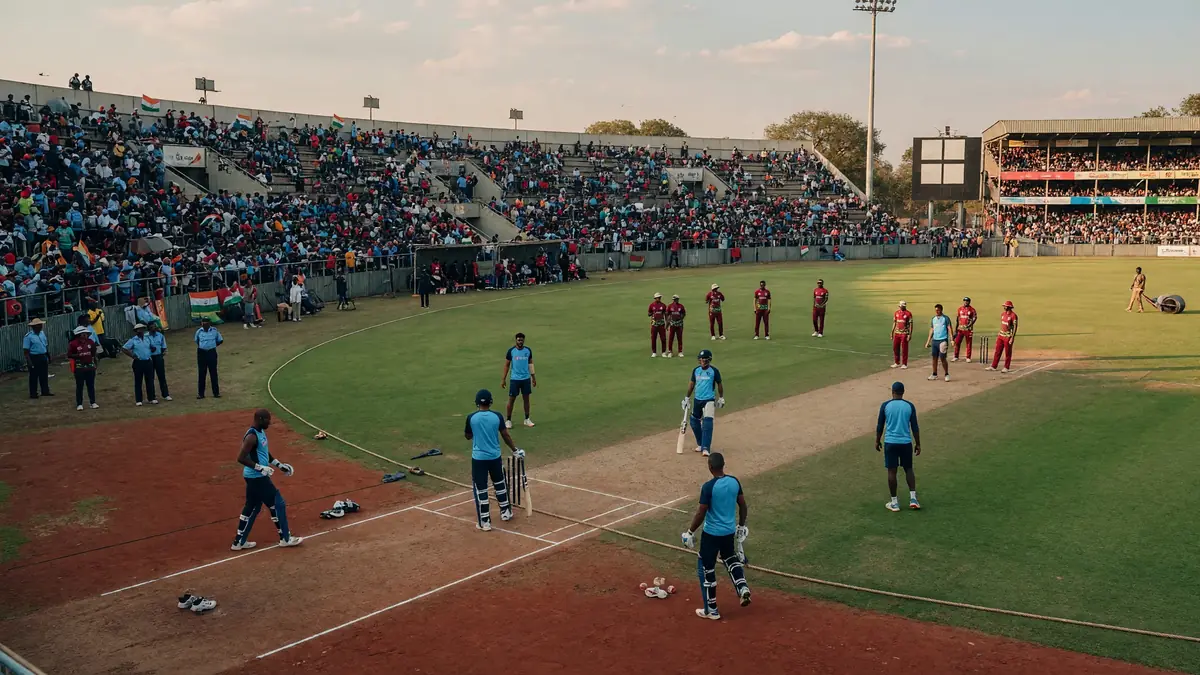
India’s men’s team is scheduled for a three-match T20 International series in Zimbabwe beginning 23 July 2026, with the fixtures listed through 26 July in Harare. Soniya Chowdhury reported the outline for iNews Zoombangla on 22 July 2026.
The operational detail that shapes everything else is density: three internationals inside four calendar days. That is not a leisurely bilateral stop with recovery gaps. It is a single short block that will produce a series scoreline, a clear sample of roles, and little room to hide slow tactical adjustments.
Match start times, travelling parties, captains and ground-level pitch notes are not in the initial report. The firm public facts remain format, dates, host city and the dual purpose assigned to the trip — Indian rotation and evaluation minutes, and home competitive cricket for a Zimbabwe side still rebuilding its programme.
Schedule shape before anyone names an XI
Openers on 23 July and a series end by 26 July leave almost no empty day between fixtures. Bowling loads from night one still sit in the legs when night two begins. Fielding intensity stacks. Keepers and middle-order batters face repeated high-pressure overs with limited downtime to rewrite plans on paper.
That loop rewards role clarity. A side chasing continuity can print a similar XI three times and chase a clean series result. A side chasing information can change powerplay, middle-over and death assignments night to night because the next sample arrives almost immediately. The calendar itself becomes the first tactical clue long before a squad graphic lands.
Readers following the series should treat the four-day box as the frame: settle, play, short reset, play again. Claims about dew windows, spinner grip or late swing stay off the board until local forecasts and groundstaff notes are public.
The same density also changes how a series narrative should be written in real time. Night-one analysis cannot assume a week of net work before night two. Adjustments have to be small enough to teach in a single session and large enough to matter under lights. That is why role language — new ball, middle overs, finish overs, impact fielder — will matter more in desk notes than long-form player biographies during this window.
Verified sheet, empty cells
From the Zoombangla report, the locked cells are limited:
- Three T20 Internationals.
- Series opens 23 July 2026.
- Fixtures listed through 26 July 2026.
- Host city: Harare.
- India’s stated use of the block: rotation and bench evaluation ahead of major ICC events.
- Zimbabwe’s stated use: competitive home minutes against a top-ranked opponent during a longer rebuild.
Empty cells stay empty here: named squads, leadership groups, the exact ground inside Harare, toss windows, broadcast times and any scoreline projection. Those should come from board channels or match-eve notes, not from padded preview copy.
For wider international series context as the window opens, see COMEsportsdaily’s cricket coverage.
Reading India’s nights: brief first, averages second
The source account presents the tour as a place for India to put fringe candidates into real international overs rather than sealing a first-choice XI for a marquee series chase alone. That framing changes the scorecard reading. A batter finishing overs, a new-ball bowler holding a lane, or an all-rounder covering two phases should be judged against the job they were handed on the night.
A settled combination hunting only a sweep will look different from a group spreading minutes across powerplay control, middle overs and the death. One quiet score does not kill a candidate if the brief was narrow; one loud score does not crown a permanent role if the sample is a single outing inside a four-day crush.

Chowdhury’s report also places the package in a quieter stretch between major tournaments, when players generally arrive fresher and medical noise is lower. In that lane, aggressive rotation is easier to justify: seniors who need downtime before the next ICC peak can be managed, while others collect match intensity that nets and domestic cricket cannot fully copy.
None of that names an XI. Unofficial squad lists without a primary board release remain unverified. At publication, the public record for this assignment stops at purpose and calendar.
Reading Zimbabwe’s nights: home sample, not ceremony
For Zimbabwe, the series is framed as preparation, not a ceremonial host date. Three home T20Is against a top-ranked side feed the team’s own tournament calendar while the wider cricket system continues multi-year rebuild work.
Home familiarity is part of that framing. Surfaces, boundary sizes, outfield speed and evening air sit with the host dressing room first. That is a note about preparation advantage, not a prediction of an upset. A rebuilding side still gains from crowd energy and surface knowledge repeating across three nights against the same opponent.
One heavy defeat does not define a cycle. Three contests under the same broad conditions can show whether death bowling holds, whether top-order starts convert, and whether fielding standards survive scoreboard pressure. For a programme collecting high-quality samples, those repeats are the product.
Hosting also concentrates support staff, logistics and local knowledge in one city. A single-host package does not remove the competitive gap between a top-ranked visitor and a rebuilding host, but it does remove the distraction of constant venue changes. For Zimbabwe, that stability is part of the value of the block even before a ball is bowled on 23 July.
What four days forces on both benches
Even without pitch maps, compression steers choices. Bowling units may be managed in waves rather than asked for identical workloads every night. Batters who can cover multiple positions become more valuable because a single niggle can force a reshuffle inside 24 hours.
If India leans into the evaluation brief described in the report, match one can set baseline roles, match two can stress-test alternatives, and match three can show which combinations still hold under fatigue. Zimbabwe, defending home conditions, may prefer clearer continuity so learning compounds rather than resetting with every XI change.
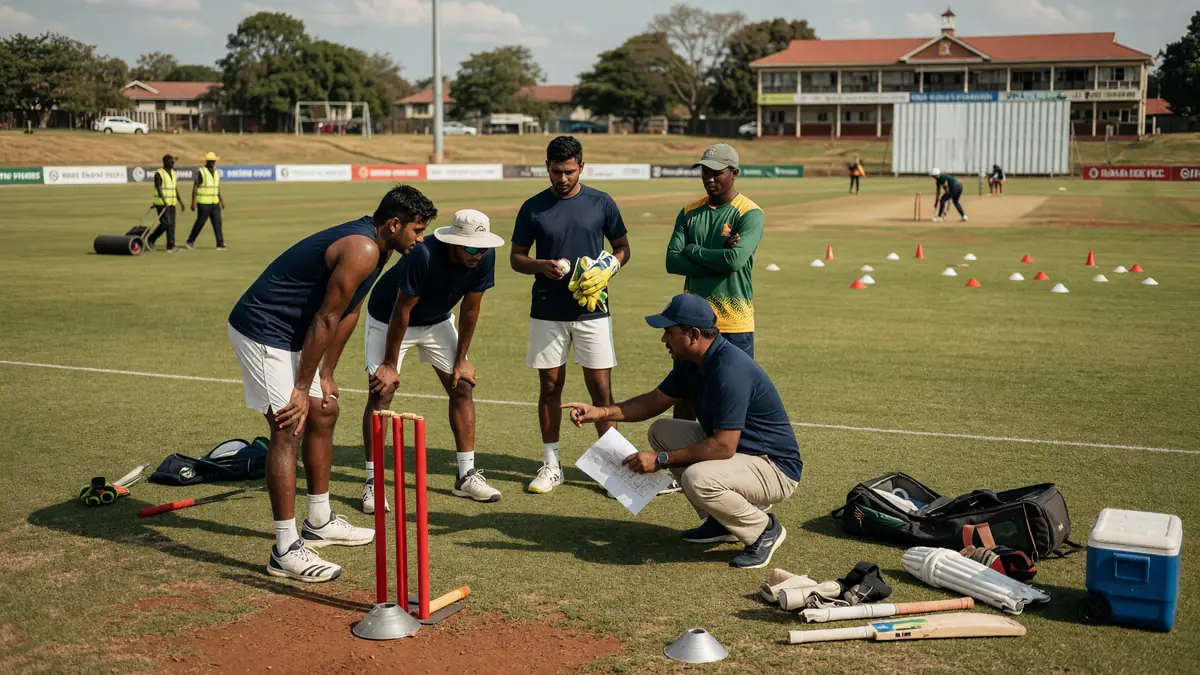
A slow start also costs more here than in a longer series. A poor first outing collides immediately with the second preparation window. That does not demand panic selections. It does demand faster video turnaround and unusually clear communication of role tweaks before the next toss.
Weather and surface behaviour remain unconfirmed in the initial article. Until those notes are public, speculative swing or dew claims stay out of this desk’s copy.
Quiet-window context, kept narrow
Placing the tour between major tournaments helps explain why India can treat the trip as evaluation and why Zimbabwe values three home internationals. It does not, by itself, name India’s next ICC stop or publish a full multi-month commitment matrix.
The solid takeaway is narrower. This package is not being sold as a frozen-first-choice rivalry series. It is high-quality competitive cricket inside a manageable risk envelope. Zimbabwe’s incentive is almost the mirror image: stretch a rebuilding group against elite opposition without leaving home.
A single-city Harare window also keeps travel compact compared with a multi-venue itinerary. Detailed staffing logistics sit outside the verified article body. Editorially, what matters is that both programmes accepted a dense T20I package rather than a drawn-out schedule.
Desk watch across the three nights
Until official XIs and timing notes land, coverage stays anchored to confirmed facts and transparent blanks. Confirm each match-day start once a primary outlet or board channel posts it. Record toss and final XIs without guessing. Separate performance notes from selection rumour. Keep series scoreline updates distinct from longer ICC projection pieces.
The opener on 23 July is the first hard checkpoint. One match cannot validate a rotation policy, but it can show whether India is genuinely spreading roles or merely tweaking a settled core. For Zimbabwe, night one shows whether home familiarity translates into control of the middle overs — often where rebuilding sides either stabilise or leak the game.
Across nights two and three, the questions turn to continuity. Do the same bowling changes appear at the same moments? Do batting pairs get repeated licence against a match-up? Does fielding standard hold as legs get heavier? Those answers come from on-field evidence without inventing off-field drama.
Series scoreline still matters. A 3–0, 2–1 or shared set changes the tone of selection notes after the window closes. It does not rewrite the purpose assigned to the trip in the initial report. Evaluation minutes and home competitive samples can both be judged honestly even when the final tally is lopsided, provided the desk separates role performance from narrative overreach.
Attribution and hard limits
This note rests on the 22 July 2026 iNews Zoombangla article by Soniya Chowdhury: three T20Is, the 23–26 July window, the Harare listing, four-day compression, Indian rotation ahead of major ICC events, and Zimbabwe’s home competitive minutes during a rebuild. Where that article is silent — named squads, captains, exact grounds inside the city, ball-by-ball expectations — this desk stays silent.
Crowd size, ticket sales and social reaction are omitted because they were not part of the verified source package for this run. If later primary board statements expand the factual record, those updates should appear as dated additions, not retro-fitted into this preview as if they had always been known.
Next marker
The next concrete event is the series opener on 23 July 2026 in Harare. That match turns the itinerary into a live selection and tactics document. Until then, the firm public facts remain three T20Is, four days, one host city, and two programmes using the same short series for different reasons.